

Best Faceless YouTube Niches to Start in 2026
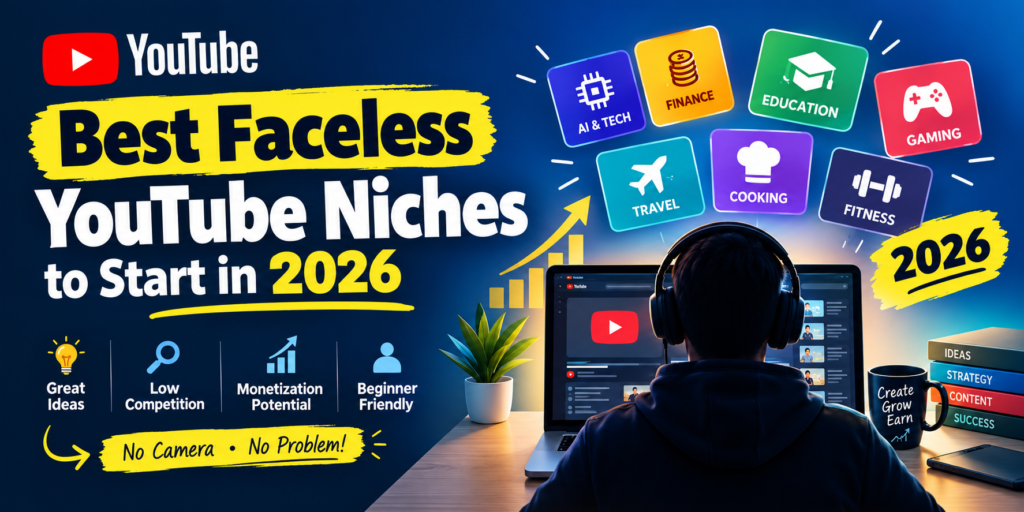
Starting a YouTube channel no longer requires an expensive camera, a professional studio, or even showing your face on screen. In 2026, creators can build audiences through voiceovers, screen recordings, animations, stock footage, original graphics, and AI-assisted production. This has made faceless YouTube channels an attractive option for beginners who want to create content with limited equipment.
However, success does not come from choosing a popular niche alone. The best faceless YouTube niches combine audience demand, manageable competition, consistent content opportunities, and realistic monetization potential.
Whether you want to create educational videos, publish YouTube Shorts, explain technology, or build a long-term content business, this guide explores the best faceless YouTube niches to start in 2026 and explains how to choose the right one for your goals.
What Is a Faceless YouTube Channel?
A faceless YouTube channel is a channel where the creator does not appear on camera. Instead, videos communicate information or tell stories using voiceovers, screen recordings, animations, slides, original illustrations, gameplay, or other visual elements.
For example, a creator can teach people how to use software by recording their screen, explain financial concepts using animated charts, or share historical stories using maps and illustrations.
Faceless content works across many categories, including education, entertainment, technology, productivity, and storytelling. Nevertheless, YouTube channels must still provide original value and follow the platform’s monetization policies. Simply uploading repetitive, mass-produced, or minimally edited videos is not a reliable strategy for building a sustainable channel.
15 Best Faceless YouTube Niches to Start in 2026
The following niches offer different opportunities for creators, from beginner-friendly tutorials to research-based documentaries. Competition and earning potential vary by topic, audience, language, and content quality, so treat these as opportunities to investigate rather than guaranteed results.
1. AI Tools and Artificial Intelligence Tutorials
Artificial intelligence continues to create opportunities for educational content. People want to understand how AI tools work, which tools are useful, and how to apply them to everyday tasks.
A faceless YouTube channel can demonstrate AI platforms through screen recordings, step-by-step tutorials, and practical examples.
Video ideas:
- Best Free AI Tools for Beginners in 2026
- How to Create Videos With AI Tools
- Five AI Tools That Can Save You Hours of Work
- ChatGPT Tips Most Beginners Overlook
- How to Automate Everyday Tasks With AI
Why this niche is promising: New tools, updates, and workflows create opportunities for fresh content. Tutorials can also attract viewers searching for solutions to specific problems.
Monetization opportunities: Advertising, relevant software affiliate programs, sponsorships, and digital tutorials.
To stand out, demonstrate real workflows instead of producing generic lists of AI tools. Test each product and explain its limitations honestly.
2. Personal Finance and Money Education
Personal finance is another potential niche for faceless creators because people regularly search for ways to budget, save money, understand credit, and manage expenses.
You can explain financial concepts using charts, animations, simple examples, and voiceovers without appearing on camera.
Video ideas:
- How to Build a Monthly Budget From Scratch
- Seven Money Habits That Help You Save More
- Compound Interest Explained for Beginners
- Common Budgeting Mistakes to Avoid
- How to Create an Emergency Fund
Why this niche is promising: Financial questions are evergreen, meaning useful videos can continue attracting viewers long after publication.
Monetization opportunities: Advertising, finance-related sponsorships, educational products, and eligible affiliate partnerships.
Accuracy is essential in this category. Avoid guaranteed investment returns, misleading wealth claims, or personalized financial recommendations presented without appropriate context.
3. Tech Tutorials and Software Guides
Technology tutorials are particularly suitable for creators who prefer screen recording over filming themselves. You can demonstrate websites, mobile applications, editing software, productivity platforms, and computer tools.
These videos often address specific problems, making them useful for search-driven content strategies.
Video ideas:
- How to Use Canva for Beginners
- How to Edit Videos With Free Software
- Best Free Productivity Apps for Students
- How to Fix Common Computer Problems
- Google Sheets Tips Every Beginner Should Know
Why this niche is promising: Software changes regularly, creating opportunities to update older tutorials and publish new guides.
Monetization opportunities: Advertising, software affiliates, sponsored tutorials, and downloadable templates.
Focus on clear instructions, readable screen recordings, and accurate demonstrations. A helpful tutorial can outperform a visually impressive video that fails to solve the viewer’s problem.
4. Educational Explainer Videos
Educational explainer channels simplify complicated subjects through illustrations, animation, diagrams, and narration.
Possible subjects include science, psychology, geography, mathematics, economics, and everyday questions about the world.
Video ideas:
- Why Do Airplanes Leave White Lines in the Sky?
- How Does the Internet Actually Work?
- Why Do We Dream?
- How Volcanoes Form and Erupt
- Everyday Science Facts Explained Simply
Why this niche is promising: Educational topics can have a long shelf life, and one research process can generate several related video ideas.
Monetization opportunities: Advertising, educational sponsorships, digital learning resources, and relevant affiliate products.
Research carefully and use trustworthy sources. Avoid presenting disputed theories as established facts, and make complicated ideas understandable without sacrificing accuracy.
5. History and Documentary Storytelling
History channels explore historical events, civilizations, famous inventions, ancient mysteries, and influential people. They can use maps, timelines, public-domain images, original illustrations, and carefully selected archival materials.
This niche is suitable for creators who enjoy research and storytelling.
Video ideas:
- How Ancient Civilizations Built Their Greatest Cities
- The Rise and Fall of a Powerful Empire
- Forgotten Inventions That Changed History
- How Trade Routes Connected the Ancient World
- Historical Events That Changed the Modern World
Why this niche is promising: Historical stories can remain relevant for years, and detailed storytelling encourages viewers to watch longer videos.
Monetization opportunities: Advertising, educational sponsorships, memberships, and related learning products.
Verify historical claims and check image and footage licenses. Using copyrighted documentaries or other creators’ videos without permission can create serious copyright problems.
6. Mystery and Unsolved Case Stories
Mystery content can attract viewers through curiosity, suspense, and narrative structure. Topics might include historical mysteries, unexplained discoveries, lost expeditions, and documented unanswered questions.
Video ideas:
- Five Historical Mysteries That Still Puzzle Researchers
- The Lost Expedition That Changed Exploration
- Strange Archaeological Discoveries Explained
- Unsolved Mysteries From the Ancient World
- Disappearances That Remain Historically Unexplained
Why this niche is promising: Strong storytelling can encourage viewers to watch complete episodes and return for new investigations.
Monetization opportunities: Advertising, memberships, sponsorships, and longer documentary compilations.
Distinguish verified evidence from speculation. When covering real crimes or tragedies, use respectful language and avoid unsupported accusations, graphic details, or sensationalized claims.
7. Motivational Videos and Personal Development
Personal development channels discuss habits, discipline, productivity, goal setting, confidence, and time management.
A faceless format can combine original narration, practical exercises, animated text, and licensed footage.
Video ideas:
- How to Build Discipline When You Lack Motivation
- Five Habits That Make Your Mornings More Productive
- How to Stop Procrastinating and Start Working
- Simple Ways to Improve Your Daily Routine
- How to Set Goals You Can Actually Follow
Why this niche is promising: The topics address recurring challenges and can be adapted into both long-form videos and Shorts.
Monetization opportunities: Advertising, planners, journals, digital courses, and relevant sponsorships.
Instead of relying on generic motivational quotes, provide actionable advice, original examples, and realistic steps viewers can apply.
8. Business Case Studies and Brand Stories
Business storytelling examines how companies grow, why products succeed, and what happens when businesses make important decisions.
Videos can use timelines, financial charts, product images, and original diagrams to explain complex stories.
Video ideas:
- How a Small Business Became a Global Brand
- Why Some Popular Products Fail
- The Business Strategy Behind Subscription Services
- How Online Marketplaces Make Money
- Lessons From Famous Business Turnarounds
Why this niche is promising: Business case studies combine education, storytelling, and practical insights for aspiring entrepreneurs.
Monetization opportunities: Advertising, business software sponsorships, relevant affiliate offers, and educational resources.
Use reliable sources for financial figures and company histories. Clearly separate documented facts from your own interpretation.
9. Gaming Guides and Gameplay Content
Gaming is a broad niche with opportunities for creators who prefer recording gameplay rather than appearing on camera.
You can publish walkthroughs, strategy guides, challenge videos, beginner tutorials, game updates, and original commentary.
Video ideas:
- Beginner Tips for a Popular Strategy Game
- Hidden Features Every New Player Should Know
- How to Complete Difficult Game Challenges
- Best Settings for Smoother Gameplay
- Common Mistakes New Players Make
Why this niche is promising: Games with active communities can generate recurring search interest around updates, strategies, and new releases.
Monetization opportunities: Advertising, sponsorships, streaming, memberships, and permitted affiliate partnerships.
Choose games you understand and add meaningful commentary or analysis. Check the publisher’s video policy, especially if your content includes copyrighted music or other restricted material.
10. Health, Fitness, and Healthy Habits
Health and fitness content can cover general wellness education, beginner workouts, mobility, sleep habits, exercise explanations, and healthy routines.
Faceless videos can use original diagrams, demonstrations featuring other consenting participants, and clear animations.
Video ideas:
- Beginner-Friendly Home Workout Routine
- Simple Ways to Build a Consistent Walking Habit
- Common Exercise Form Mistakes Explained
- How to Create a Sustainable Fitness Routine
- Basic Sleep Habits for Better Rest
Why this niche is promising: Many people look for accessible ways to improve their everyday routines.
Monetization opportunities: Advertising, fitness equipment partnerships, relevant products, and workout resources.
Health content requires particular care. Use credible medical sources, avoid unsupported treatment claims, and make clear when viewers should consult a qualified healthcare professional.
11. Book Summaries and Ideas From Books
Book-related channels can explain concepts from business, psychology, productivity, history, and personal development books.
Rather than simply reading books aloud, creators can summarize key concepts in their own words and discuss how the ideas apply in real life.
Video ideas:
- Five Powerful Ideas From Popular Productivity Books
- Lessons From Books About Building Better Habits
- Essential Business Books for New Entrepreneurs
- How to Apply the Pareto Principle in Everyday Life
- Important Psychology Concepts Explained Simply
Why this niche is promising: Viewers can discover useful ideas without needing to watch a conventional talking-head presentation.
Monetization opportunities: Book affiliate links, advertising, sponsorships, and original study guides.
Respect copyright. Do not reproduce substantial portions of a book or assume that adding a voiceover automatically makes copied material permissible.
12. Travel Guides and Destination Explainers
Travel content does not always require personally filming destinations. A faceless channel can provide destination guides using original maps, licensed footage, photographs with appropriate permissions, and detailed research.
Video ideas:
- Best Places to Visit on a Limited Budget
- Things to Know Before Visiting a New Country
- Beautiful Destinations for First-Time Travelers
- Common Travel Mistakes Beginners Should Avoid
- How to Plan a Trip Without Overspending
Why this niche is promising: Travelers research destinations, transportation, costs, cultural expectations, and itineraries before making decisions.
Monetization opportunities: Travel affiliates, accommodation partnerships, travel insurance affiliates where appropriate, and destination sponsorships.
Keep information current, particularly prices, visa rules, opening hours, and travel requirements. Date-sensitive details should be checked before publication.
13. Cooking Tutorials and Food Education
A food channel can show ingredients, utensils, preparation steps, and finished dishes without revealing the creator’s face.
Top-down camera angles and close-up shots can make recipes easy to follow.
Video ideas:
- Five Easy Breakfast Ideas for Busy Mornings
- Budget-Friendly Meals for Students
- Beginner Cooking Mistakes and How to Fix Them
- Simple Recipes Using Everyday Ingredients
- How to Prepare Meals for the Week
Why this niche is promising: Recipes solve practical problems and can attract search traffic over time.
Monetization opportunities: Advertising, kitchen product affiliates, sponsorships, and original recipe collections.
Test recipes before publishing, include accurate measurements, and provide clear cooking and food-safety instructions.
14. Productivity and Study Techniques
Productivity channels help students, remote workers, and professionals manage their time and complete tasks more effectively.
Content can feature screen recordings, animated schedules, digital planners, note-taking demonstrations, and practical workflow examples.
Video ideas:
- How to Study More Effectively in Less Time
- Best Free Apps for Organizing Your Tasks
- How to Create a Weekly Study Schedule
- Digital Note-Taking Methods for Beginners
- How to Organize Your Workday Without Feeling Overwhelmed
Why this niche is promising: Study routines, planning systems, and productivity tools create opportunities for both evergreen tutorials and timely software guides.
Monetization opportunities: Advertising, planner templates, productivity software affiliates, and digital downloads.
Make your videos practical. Demonstrate a complete workflow rather than making exaggerated promises about achieving perfect productivity.
15. YouTube Growth, SEO, and Creator Tools
For creators interested in online marketing, a channel about YouTube growth can be a strong fit. You can teach keyword research, thumbnail design, analytics, audience retention, and content planning through screen recordings.
Video ideas:
- How to Find Low-Competition YouTube Keywords
- How to Write Better YouTube Video Titles
- How to Analyze YouTube Studio Analytics
- Best Free Tools for New YouTube Creators
- How to Improve YouTube Shorts Retention
Why this niche is promising: New creators continuously need guidance on publishing, optimization, and channel development.
Monetization opportunities: Advertising, creator-tool affiliates, templates, courses, and consulting services.
Avoid promising guaranteed views or subscribers. Explain what can be tested, show actual examples, and update tutorials when YouTube changes its features.
Which Faceless YouTube Niches Have the Best Potential?
Different niches suit different goals. The following comparison provides a starting point for deciding where to focus your research.
| Niche | Production Difficulty | Evergreen Potential | Possible Monetization |
|---|---|---|---|
| AI tools | Medium | Medium | Software affiliates, sponsorships |
| Personal finance | Medium–High | High | Ads, relevant partnerships |
| Tech tutorials | Low–Medium | High | Ads, software affiliates |
| Educational explainers | Medium–High | High | Ads, educational products |
| History documentaries | High | High | Ads, memberships |
| Mystery storytelling | Medium–High | Medium–High | Ads, memberships |
| Motivation | Low–Medium | Medium–High | Ads, digital products |
| Business case studies | High | High | Ads, sponsorships |
| Gaming | Medium | Medium | Ads, sponsorships |
| Health and fitness | Medium | High | Ads, relevant products |
| Book ideas | Medium | High | Ads, book affiliates |
| Travel guides | Medium–High | Medium | Travel partnerships |
| Cooking | Medium | High | Ads, kitchen products |
| Productivity | Low–Medium | High | Templates, software affiliates |
| YouTube SEO | Low–Medium | Medium–High | Creator tools, courses |
These are qualitative estimates, not measured keyword difficulty or earnings data. Actual results depend on audience demand, competition, viewer location, watch time, content quality, and your monetization strategy.
How to Choose a Low-Competition Faceless YouTube Niche
Selecting a niche based only on popularity can lead to frustration. A better approach is to identify a specific audience and solve a problem that existing videos do not fully address.
1. Start With a Specific Audience
Instead of creating a broad technology channel, consider teaching free software to beginners. Instead of covering all aspects of finance, focus on budgeting for students or first-time earners.
A narrower audience makes it easier to develop a consistent content strategy.
2. Find Long-Tail Keywords
Long-tail keywords are specific search phrases that often reveal a clear viewer need.
For example:
- Broad keyword: YouTube SEO
- More specific keyword: YouTube SEO for beginners
- Long-tail keyword: How to Find Low-Competition YouTube Keywords for Beginners
Use YouTube search suggestions, Google Trends, competitor research, and keyword research tools to discover related queries. Compare the quality and relevance of existing results rather than assuming every specific phrase has low competition.
3. Analyze Competing Channels
Search for your target topic and review the videos that already rank or attract views.
Look for unanswered questions, outdated tutorials, unclear explanations, weak examples, and topics that competitors rarely cover. These gaps can inspire useful content, but low view counts alone do not prove that a keyword is easy to rank for.
4. Check Whether You Can Produce Videos Consistently
Choose a niche that matches your skills, interests, and available time. A documentary channel might require extensive research and editing, while a software tutorial channel could be produced with a screen recorder and a clear script.
Before committing, brainstorm at least 30 video ideas. If you struggle to find enough useful topics, the niche may be too narrow or unfamiliar.
5. Evaluate Monetization Realistically
Think beyond advertising revenue. Consider whether viewers might benefit from relevant software, educational resources, templates, products, or services.
However, do not choose a niche solely because someone claims it has high advertising rates. Revenue varies considerably, and monetization depends on audience location, advertiser demand, eligibility, and content suitability.
How to Start a Faceless YouTube Channel in 2026
Once you choose your niche, follow a simple launch process.
Step 1: Define your channel’s purpose. Write one sentence explaining who your channel helps and what viewers will learn or experience.
Step 2: Research your first 20–30 topics. Group related keywords into content clusters so viewers can move naturally from one video to another.
Step 3: Write original scripts. Begin with a clear hook, explain the problem, deliver useful information, and end with a relevant next step. Avoid copying scripts from other creators.
Step 4: Create your videos. Use screen recordings, original graphics, licensed footage, animation, gameplay, or your own narration. AI tools can assist with research, outlines, editing, and captions, but human review remains important.
Step 5: Optimize your titles and thumbnails. Make the topic clear, use accurate promises, and design thumbnails that remain readable on small screens. Include your primary keyword naturally in the title and description when relevant.
Step 6: Publish consistently. Choose a realistic schedule you can maintain. One well-researched video each week is often a better starting point than daily uploads that sacrifice quality.
Step 7: Review your analytics. Monitor impressions, click-through rate, average view duration, audience retention, and traffic sources. Use these signals to improve your future videos rather than judging your channel by subscriber count alone.
Can You Monetize a Faceless YouTube Channel in 2026?
Yes. YouTube does not generally require creators to appear on camera to monetize their channels. Faceless channels can qualify when they meet the applicable YouTube Partner Program requirements and comply with monetization policies.
However, uploading videos without showing your face does not automatically make a channel eligible.
Creators should understand three important principles:
- Originality matters: Provide meaningful commentary, education, analysis, entertainment, or other original value.
- Copyright matters: Use material you own, have permission to use, or can lawfully use under applicable rules. Giving credit alone does not automatically grant permission.
- Repetitive or mass-produced content can be a problem: Videos with little meaningful variation or added value may fail YouTube’s monetization requirements.
YouTube’s eligibility thresholds and policies can change, so consult the official YouTube Partner Program information before planning your monetization timeline. Do not build a business around the assumption that a certain number of uploads or views guarantees approval.
Common Mistakes to Avoid When Building a Faceless Channel
Many beginners focus on automation before understanding what makes a video worth watching. Avoid these common mistakes:
Choosing a niche only because it appears profitable: A high-revenue category is not useful if you cannot produce credible, engaging content consistently.
Copying successful competitors: Study their formats and identify audience needs, but create original scripts, examples, visuals, and explanations.
Publishing generic AI-generated videos: AI can improve efficiency, but unreviewed scripts, inaccurate information, repetitive visuals, and robotic narration can undermine viewer trust.
Ignoring thumbnails and introductions: Even valuable information can struggle if viewers do not understand the topic or leave within the first few seconds.
Expecting instant results: Building a loyal audience requires testing, learning, and improving. There is no guaranteed timeline for reaching a specific number of subscribers or views.
Ignoring analytics: If a video receives impressions but few clicks, examine the title and thumbnail. If viewers click but leave quickly, investigate the introduction, pacing, and whether the content delivers what the title promised.
Frequently Asked Questions
What is the best faceless YouTube niche for beginners in 2026?
Tech tutorials, productivity, AI tool demonstrations, and educational explainers are useful starting points because they can be produced with screen recordings, original graphics, and narration. The best option depends on your knowledge, available time, and audience.
Which faceless YouTube niche has the lowest competition?
There is no single niche that is consistently the least competitive. Competition varies by keyword, language, country, and audience. Look for specific long-tail topics where existing videos fail to answer the viewer’s question clearly.
Can I start a faceless YouTube channel with no money?
Yes. You can begin with free screen-recording software, basic editing tools, free design software, and your own voice. You can upgrade your equipment and subscriptions later when your workflow and audience justify the expense.
Can AI create a complete faceless YouTube channel?
AI tools can help with brainstorming, scripting, editing, captions, and visual production. However, fully automated content without meaningful originality, quality control, or viewer value is a risky strategy. Human research, editing, and fact-checking remain important.
Are YouTube Shorts good for faceless channels?
Yes. Shorts can help introduce your channel to new viewers, test ideas, and share short educational or entertaining content. Long-form videos may be better for detailed explanations and certain monetization strategies. You can experiment with both formats and compare the results.
How long does it take to grow a faceless YouTube channel?
There is no guaranteed timeline. Some channels attract viewers quickly, while others need months of consistent publishing and improvement. Your results depend on audience demand, topic selection, packaging, retention, competition, and content quality.
Final Thoughts
The best faceless YouTube niches to start in 2026 are not necessarily the most popular ones. They are the niches where you can serve a clear audience, produce valuable content consistently, and differentiate yourself from competing channels.
AI tutorials, technology guides, personal finance education, history documentaries, productivity, and YouTube SEO are all worth researching. Each offers different production demands, audience expectations, and monetization opportunities.
Start by selecting two or three niches that match your skills. Research specific keywords, study competing videos, and outline your first 20–30 topics. Then choose one niche and publish a small batch of high-quality videos before deciding whether to expand or adjust your strategy.
Remember: You do not need to show your face to build a successful YouTube channel. You need to give viewers a compelling reason to click, watch, trust your content, and return for more.